Why Gen Z Stopped Googling: The Social Search Revolution Reshaping Marketing in 2026
"TikTok it" has replaced "Google it" for Gen Z. Understand how social platforms became the new search engines and what this means for your brand's discoverability strategy.
Why Gen Z Stopped Googling: The Social Search Revolution Reshaping Marketing in 2026
Meta Description: Gen Z now "TikToks" instead of "Googles." Learn how social search on TikTok, Instagram, and YouTube is reshaping discovery and what marketers must do to adapt in 2026.
---
"I don't Google restaurants anymore," a friend mentioned recently. "I TikTok them." She wasn't looking for the menu link or opening hours—information Google excels at providing. She wanted to see someone walk through the door, pan across the room, show the plates, and answer the visceral question: Is this place worth my time?[1]
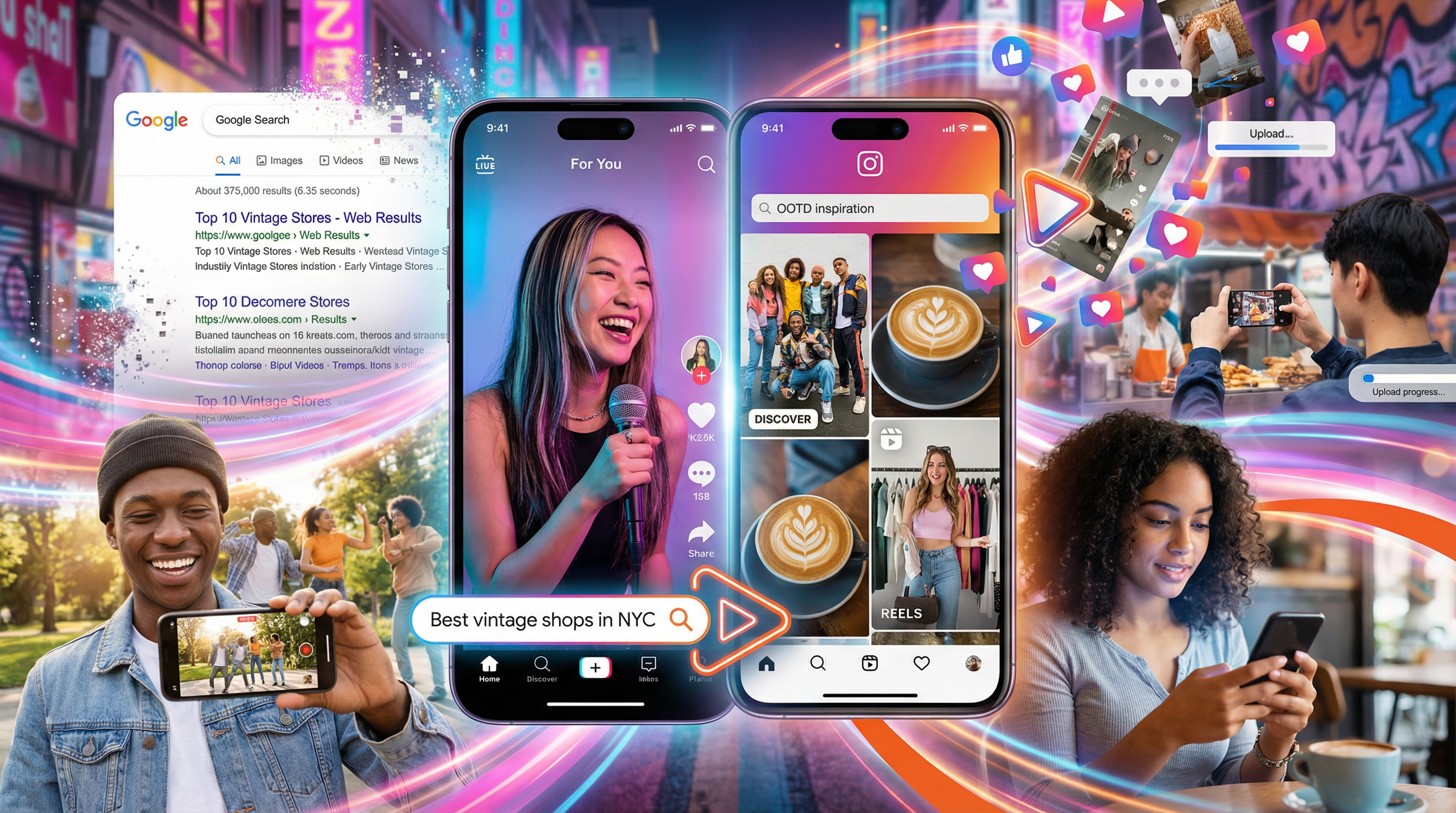
That casual comment encapsulates the most significant shift in consumer behavior since the rise of mobile search. For a growing share of Gen Z and Millennials, discovery no longer begins with Google. It starts inside TikTok, Instagram, and YouTube—platforms that now function as search engines where discovery happens in-feed rather than through lists of blue links[1].
This isn't a minor channel shift. It's a fundamental reconceptualization of how people find, evaluate, and decide. The implications for marketers are profound. Brands that built their entire acquisition strategy around Google search visibility are discovering that their target customers never see them, because those customers aren't searching where the brands are optimized to be found.
The Anatomy of Social Search Behavior
Traditional search operated on an information retrieval model. Users had questions. Search engines provided links to pages with answers. The user clicked, read, evaluated, and made decisions based on the information gathered.
Social search follows a fundamentally different pattern. Users don't want pages of information—they want to see real people demonstrating real experiences. They're not looking for the "best restaurants in Hong Kong" as an abstract list. They want to watch someone actually eat there, see their genuine reaction, hear their unscripted thoughts, and judge whether this person's taste aligns with their own[1].
This shift reflects deeper changes in how people process information and make trust decisions. Text-based information feels curated, edited, potentially biased by commercial interests. Video from real people—especially creators who aren't obvious brand ambassadors—feels authentic. Even when users intellectually understand that social content can be sponsored or staged, the format creates an emotional sense of transparency that traditional web pages can't match.
The behavioral pattern extends far beyond restaurants. Gen Z "TikToks" fashion brands to see how clothes look on real bodies in real lighting. They "Instagram" hotels to see what rooms actually look like beyond professionally shot marketing photos. They "YouTube" product reviews to watch unboxing experiences and hear candid assessments from people who've actually used the item.
Platforms as Search Engines: The Technical Evolution
The major social platforms have recognized this behavioral shift and evolved their technology accordingly. TikTok, Instagram, and YouTube now behave like search engines, with sophisticated algorithms that surface relevant content based on query intent, not just follower relationships[1].
TikTok's search functionality has become remarkably sophisticated. Type a query and the platform doesn't just show you videos tagged with those keywords—it understands semantic meaning, user intent, and contextual relevance. The algorithm considers which creators are authoritative on specific topics, which videos generate genuine engagement (not just views), and which content satisfies the implicit question behind the search.
Instagram has similarly evolved beyond being a feed of content from accounts you follow. The Explore page functions as a visual search engine, surfacing content based on your interests, past behavior, and what similar users have engaged with. The platform's visual search capabilities allow users to find products, places, and experiences through image recognition, not just text queries.
YouTube has always had search functionality, but its role has shifted. Users increasingly treat it as their primary search destination for any topic requiring demonstration or explanation. "How to" queries that once went to Google now go directly to YouTube, because users prefer watching someone show them rather than reading step-by-step instructions.
The Death of the Blue Link
The most profound implication of social search is what it reveals about changing user expectations. People don't want a page of blue links anymore. They want a person demonstrating, showing, explaining[1]. This preference isn't merely about format—it reflects a fundamental shift in how people evaluate credibility and make trust decisions.
Traditional search results present information with implicit authority. If a website ranks highly on Google, users assume it must be credible, comprehensive, and trustworthy. That assumption is breaking down. Users have become sophisticated enough to recognize that rankings can be manipulated, that commercial interests shape what appears at the top of results, and that the "best" answer according to an algorithm may not be the most useful answer for their specific situation.
Social content operates on a different trust model. Users evaluate the creator's authenticity, consistency, and alignment with their own values. They look for signals of genuine experience—the casual details, unpolished moments, and spontaneous reactions that are difficult to fake. They check comments to see how other users responded. They browse the creator's other content to assess whether this person's judgment generally aligns with their own.
This shift has enormous implications for brands. Traditional SEO focused on optimizing websites to rank for relevant keywords. Social search requires optimizing for discoverability within platform algorithms and, more importantly, for the human judgment of users deciding whether your content feels authentic and trustworthy.
Content Format Evolution: What Works in Social Search
The content that succeeds in social search environments looks nothing like traditional SEO content. Long-form blog posts optimized around keyword density don't translate to TikTok. Product pages with technical specifications don't satisfy Instagram searchers. The formats that win in social search share common characteristics.
Demonstration over description. Users want to see products being used, services being delivered, experiences being had. A restaurant doesn't need to describe its ambiance—show someone walking in, panning across the room, sitting down, and reacting to the first bite. A fashion brand doesn't need to list fabric specifications—show how the garment moves, how it fits different body types, how it looks in various lighting conditions.
Authenticity over polish. Highly produced content often performs worse than casual, spontaneous videos. Users have developed sophisticated radar for detecting when something feels overly scripted or commercially motivated. The most effective social search content feels like a friend showing you something they genuinely found interesting, not a brand trying to sell you something.
Personality over information. In traditional search, the content itself matters most. In social search, the creator's personality and perspective are inseparable from the value. Users aren't just looking for information about a product—they're looking for someone whose taste and judgment they trust to tell them whether that product is worth their attention.
Context over features. Traditional product marketing focuses on specifications and features. Social search content focuses on use cases and contexts. Instead of listing a camera's megapixels and lens specifications, show what photos it actually produces in various lighting conditions. Instead of describing a hotel's amenities, show what it feels like to wake up there, what the breakfast experience is like, what the neighborhood surrounding it offers.
Platform-Specific Optimization Strategies
Each major social platform requires different optimization approaches, reflecting their unique algorithms, user behaviors, and content formats.
TikTok prioritizes content that keeps users engaged and watching. The algorithm tracks completion rates, replays, and shares more heavily than likes or comments. For brands, this means creating content with strong hooks in the first three seconds, clear value propositions that make users want to watch to the end, and formats that encourage replaying (like before-and-after transformations or quick tutorials).
TikTok's search algorithm also values recency and momentum. Content that generates rapid engagement after posting gets amplified in search results. This creates opportunities for timely content tied to trending topics, seasonal moments, or breaking news in your industry.
Instagram emphasizes visual aesthetics and aspirational content. The platform's search and Explore algorithms prioritize high-quality imagery, consistent visual style, and content that generates saves (a signal that users find it valuable enough to reference later). For brands, this means investing in strong visual identity, creating content users want to save for future reference, and using Instagram's various formats (Reels, Stories, carousel posts) strategically based on content type.
Instagram's algorithm also heavily weights engagement from your existing followers when determining whether to show your content to new audiences. This makes community building and consistent posting essential—you can't optimize for Instagram search without first building an engaged follower base.
YouTube functions as both a search engine and a recommendation engine. The platform's algorithm considers watch time, click-through rates from search results and recommendations, and user satisfaction signals (likes, comments, subscribes after watching). For brands, this means creating content with compelling titles and thumbnails that drive clicks, strong introductions that retain viewers, and clear value that encourages subscription.
YouTube's search algorithm also values authority and consistency. Channels that regularly publish content on specific topics build topical authority that helps all their videos rank better for related searches. This makes content strategy and publishing consistency more important on YouTube than on other platforms.
The AI-Generated Content Problem
As social feeds fill with AI-generated content, a new challenge emerges. The efficiency of AI tools means anyone can produce endless variations of content optimized for platform algorithms. But this creates the same problem we see with AI-generated ads—creative sameness at scale[1].
When every brand uses AI to generate social content optimized for the same metrics, the output converges toward an indistinguishable mean. The very efficiency that makes AI attractive becomes a strategic liability. In feeds filled with AI-generated sameness, the content that stands out is created by real humans with genuine perspectives and authentic experiences[1].
This dynamic creates an opportunity for brands willing to invest in human creativity. The scarcity isn't content volume—AI has made content abundant to the point of meaninglessness. The scarcity is authentic human perspective, genuine expertise, and distinctive voice. Brands that can deliver these scarce qualities will dominate social search results, not because they've optimized better, but because they've created something actually worth watching.
Measurement and Attribution Challenges
Social search creates significant measurement challenges for marketers accustomed to traditional attribution models. When someone discovers your brand through a TikTok search, watches several videos over days or weeks, eventually visits your website, and later makes a purchase, how do you attribute that conversion?
Traditional last-click attribution would credit whatever channel drove the final website visit—likely direct traffic or perhaps a Google search for your brand name. But the real discovery and consideration happened entirely within TikTok. The user never clicked a link until they were ready to purchase.
This attribution gap means many brands are systematically underinvesting in social search optimization because their measurement systems can't capture its true impact. The solution requires more sophisticated attribution modeling that tracks brand search volume, considers multi-touch journeys, and recognizes that social platforms increasingly function as the top of the funnel even when conversions happen elsewhere.
Some brands are addressing this by creating platform-specific conversion paths—using TikTok Shop, Instagram Shopping, or YouTube's integrated purchase features to keep the entire journey within the platform where it can be properly tracked. Others are investing in brand tracking studies and survey-based attribution to supplement digital analytics.
Strategic Implications for 2026 and Beyond
The rise of social search forces marketers to rethink fundamental assumptions about how customers discover and evaluate brands. Several strategic shifts are essential for brands that want to remain visible to younger audiences.
Invest in creator partnerships. Brands can't be everywhere in social search results themselves. They need authentic creators who genuinely use and recommend their products to show up when users search relevant topics. This means moving beyond transactional influencer relationships toward genuine partnerships with creators whose audiences and values align with your brand.
Optimize for platform search algorithms. Just as brands once invested heavily in SEO, they now need dedicated resources for social search optimization. This means understanding each platform's search algorithm, creating content specifically designed to surface in relevant searches, and continuously testing what drives visibility.
Prioritize video content. Text-based content still has a role, but social search is fundamentally visual. Brands that haven't developed video content capabilities are invisible in the channels where their target customers are searching. This doesn't require Hollywood production budgets—authenticity matters more than polish—but it does require consistent video creation.
Build topical authority. Social platform algorithms reward consistency and expertise. Brands that regularly create content on specific topics build authority that helps all their content surface in related searches. This means developing focused content strategies rather than trying to be everything to everyone.
Accept that control is an illusion. Traditional marketing allowed brands to control their message, placement, and presentation. Social search means your brand's visibility depends partly on what creators say about you, how users respond to that content, and whether platform algorithms decide your content is relevant. The brands that thrive will be those that earn positive mentions rather than trying to control every message.
The Competitive Landscape Shift
The social search revolution is creating winners and losers at scale. Brands that built their customer acquisition engines around Google search are discovering that their target audiences have moved to platforms where those brands have little presence. Meanwhile, digitally native brands that built social-first strategies from the beginning are capturing disproportionate attention from younger consumers.
This shift is particularly pronounced in categories where visual demonstration matters. Fashion, beauty, food, travel, and consumer electronics have seen massive discovery migration from traditional search to social platforms. Service categories are following, as users increasingly want to see real client experiences rather than reading testimonials on company websites.
The competitive advantage increasingly belongs to brands that understand they're not just competing for search rankings—they're competing for attention in feeds, for creator partnerships, for authentic user-generated content, and for the cultural relevance that makes people want to search for them in the first place.
Conclusion: Adapting to Where Your Customers Actually Are
The shift from Google to TikTok isn't a trend—it's a fundamental change in how people discover, evaluate, and decide. Brands that continue optimizing exclusively for traditional search while their target customers are searching on social platforms will find themselves increasingly invisible, regardless of how well they rank for keywords.
The solution isn't abandoning SEO—traditional search still matters for many use cases and demographics. But it requires recognizing that a comprehensive discovery strategy in 2026 must include social search optimization as a core pillar, not an experimental side channel.
The brands that win will be those that meet customers where they actually are, in the formats they actually prefer, with the authenticity they actually value. That means showing up in TikTok searches with genuine, helpful content. It means building Instagram presence that surfaces when users explore relevant topics. It means creating YouTube content that answers the questions your customers are asking.
The blue link isn't dead, but it's no longer the only path—or even the primary path—to discovery. The future belongs to brands that recognize social search as the new battleground and invest accordingly.
---
References
[1] Ennis-O'Connor, M. (2026, January 2). Social Media Trends 2026: The Five Shifts That Change Everything. Medium. Retrieved from https://marieennisoconnor.medium.com/social-media-trends-2026-943705acb420